China Designs Missile-Mounted Laser Capable of Detecting and Tracking F-35 Stealth Fighters
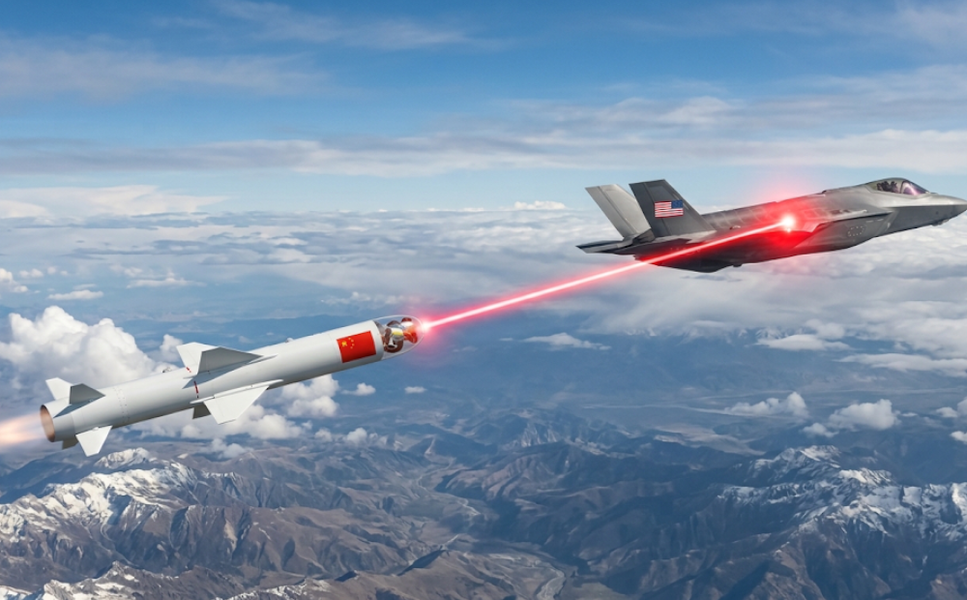
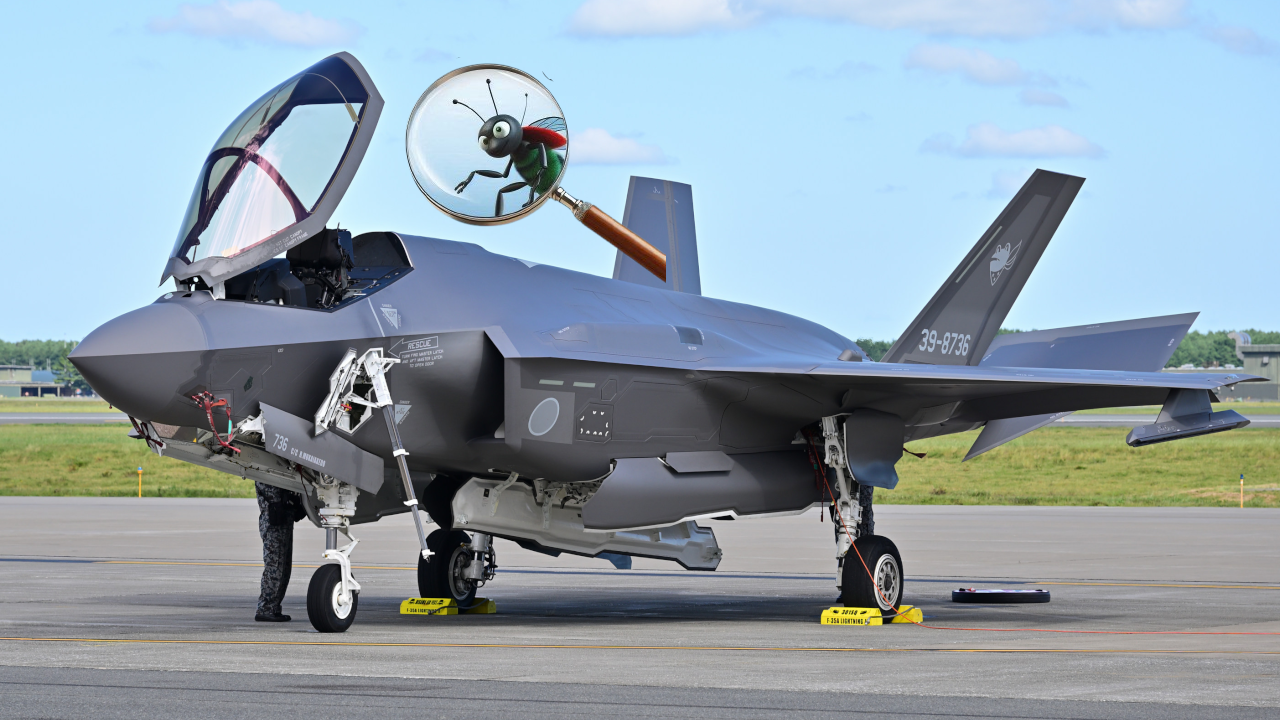
Chinese researchers have announced the design of an advanced missile-mounted single-photon lidar sensor capable of detecting and tracking the US F-35 stealth fighter from distances up to 61.5 kilometers away at night.
This laser system bypasses the F-35's stealth capabilities, which rely on specialized coatings and materials engineered primarily to absorb and scatter traditional radar waves rather than laser light. While the F-35 boasts highly advanced electronic warfare systems—including thermal and radar jamming capabilities designed to mislead incoming traditional missiles and blind their sensors—it is far less equipped to counter concentrated light waves. Because the laser system operates using precise beams of light that are unaffected by radio frequencies, it is immune to standard electronic jamming tactics, allowing it to successfully exploit this optical blind spot.
The system has yet to be built or physically tested; instead, it has been computationally simulated to study its viability prior to real-world deployment. Details of this development emerged from a recent research paper authored by a specialized team at the Chinese Academy of Airborne Missiles and published in the peer-reviewed Chinese academic journal Aero Weaponry, as reported by the South China Morning Post.
The computer simulation accounted for the practical constraints of integrating such a complex system into a missile airframe. It utilized a low-energy 1.0-millijoule laser pulse operating at a 1,064-nanometer wavelength, paired with a compact 100mm diameter lens to collect the reflected light. The study factored in various environmental variables, including atmospheric transmittance, inherent sensor noise, and ambient sky brightness. To positively identify a target, the system required a minimum signal-to-noise ratio of 8.8 decibels and the detection of at least 9.4 reflected photons.
The results highlighted a stark contrast between nighttime and daytime performance: while the nighttime detection range reached 61.5 km, sunlight interference reduced the maximum daytime range to 27.7 km. At this shorter distance, however, the system still achieved high-resolution targeting, pinpointing dimensions with an accuracy of up to 20 centimeters in depth and a transverse resolution of up to 50 centimeters.
Despite the impressive simulation results, the system faces significant engineering and technical hurdles before it can be deployed in the field. The primary obstacle is the incredibly narrow width of the laser beam—spanning no more than 50 centimeters at a distance of 27.7 kilometers—which deprives it of the wide-area scanning capabilities standard in traditional radar. To broaden the field of view and enable the system to autonomously search for and track targets without relying entirely on external cueing, the engineering solutions would need to be highly complex. Developers would have to redesign the sensor's architecture, outfitting the lidar with precise, rapidly moving mirrors for continuous mechanical and optical scanning, or integrating supplementary technologies. These modifications would impose substantial manufacturing burdens on the missile's overall design, internal volume, and power consumption.
Related Articles