Japan Selects Its First Stellarator Fusion Reactor to Move into the Implementation Phase
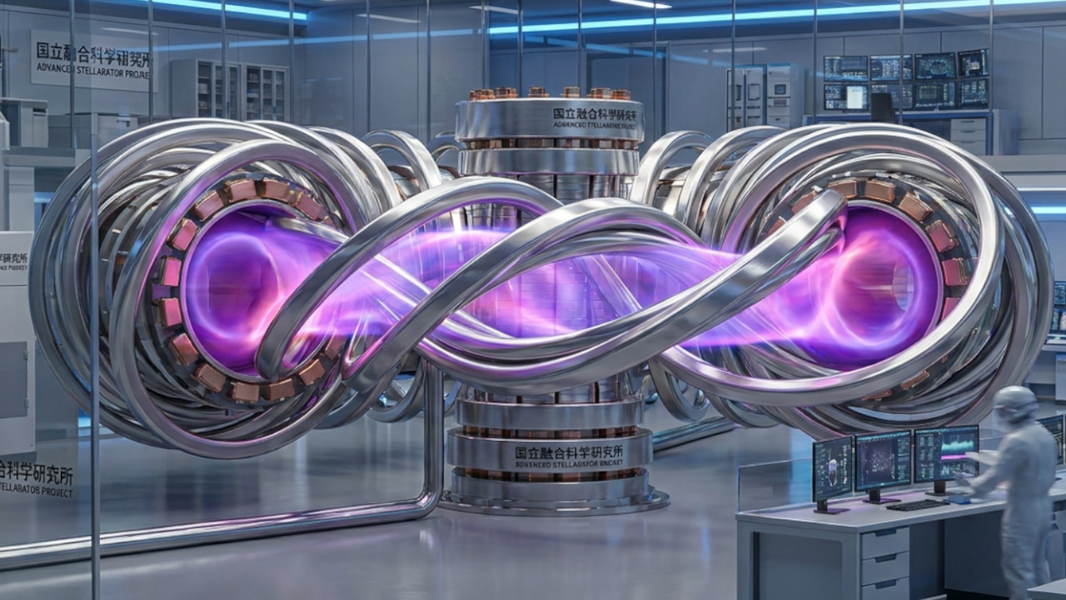
Japan has selected the startup Helical Fusion as a leading finalist for a major government support program aimed at advancing nuclear fusion technology significantly toward commercial viability in the near future.
Japan’s Ministry of Economy, Trade and Industry (METI) is leading a three-year financial support program that is expected to provide nearly ¥60 billion (approximately $400 million) by 2028 to support private-sector nuclear fusion projects in Japan. The program covers a range of technologies, including tokamak and stellarator reactors, as well as laser-driven fusion.
Helical Fusion is developing a reactor based on a design known as a helical stellarator, which differs from the ring-shaped configuration of tokamak reactors. The design is believed to offer advantages in confining plasma and sustaining the fusion reaction.
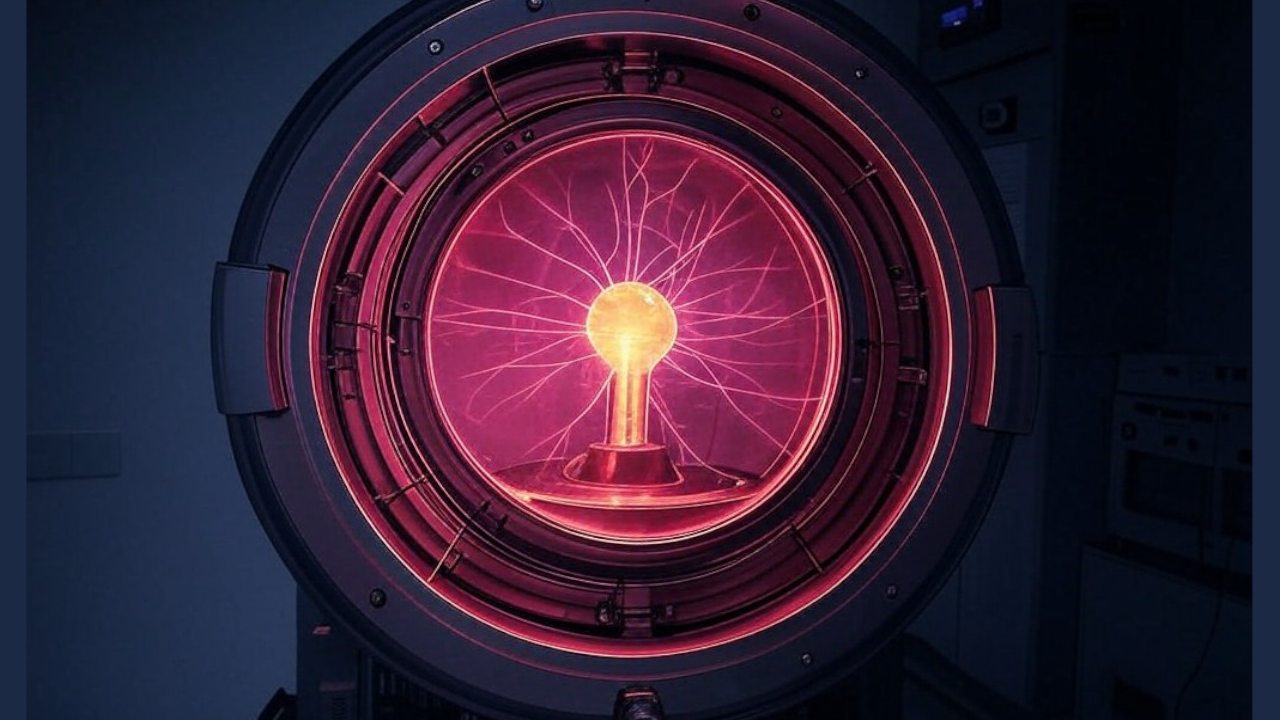
The reactor uses advanced high-temperature superconducting magnets that are precisely twisted and shaped to generate powerful magnetic fields surrounding the plasma from all directions. These fields force the plasma to remain suspended and confined along a closed helical path inside the reactor. The carefully engineered helical geometry compensates for plasma instabilities through the configuration of the external magnets, enabling highly efficient, stable, and continuous plasma confinement over extended periods while avoiding some of the technical challenges associated with conventional reactor designs such as tokamaks.
Helical Fusion’s development of this architecture builds on decades of accumulated Japanese research at the National Institute for Fusion Science (NIFS), particularly its Large Helical Device (LHD), which has a strong historical record of maintaining stable plasma for a record duration of more than 3,268 seconds—approximately 54 minutes.
The company is now seeking to integrate these technologies into a unified experimental device called Helix HARUKA. This represents a crucial step toward demonstrating that the design can progress beyond successful laboratory experiments to become practical infrastructure capable of supplying the world with stable, clean electricity.
This government funding could provide Helical Fusion with the resources needed to overcome the remaining engineering challenges. If the company succeeds in translating its unique helical approach from experimental research into practical infrastructure, Japan could potentially become one of the first countries to deliver a virtually inexhaustible source of stable, clean energy in the 2030s.
Related Articles