Powered by a Diesel–Hydrogen Hybrid Engine: First Long-Range Voyage for a Bulk Carrier
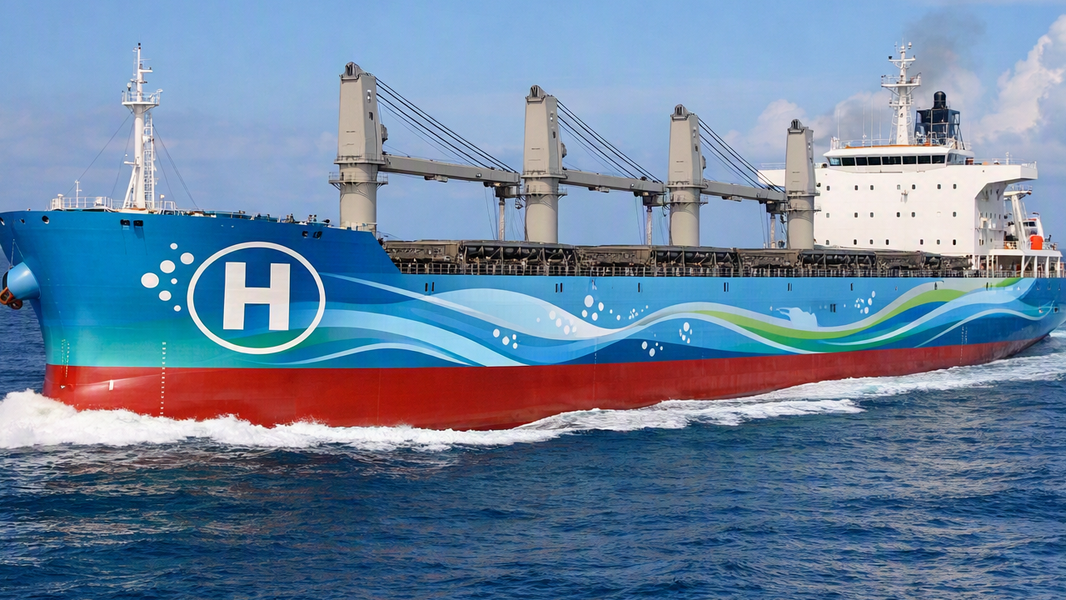
California-based Newlight has completed the first extended commercial test of its diesel–hydrogen hybrid propulsion system aboard a bulk carrier owned by Lomar Shipping, during a sea voyage spanning approximately 15,700 kilometers (8500 nautical miles) between Singapore and Ghana.
Measurements showed a 24% reduction in diesel consumption, alongside a 28% drop in carbon dioxide emissions and a 22% decrease in carbon monoxide emissions. This voyage represents the first practical proof of the hydrogen-utilizing hybrid system’s ability to operate under real-world, long-range operating conditions, moving beyond short demonstrations or laboratory trials.
A Single Diesel Engine Running on Both Hydrogen and Diesel
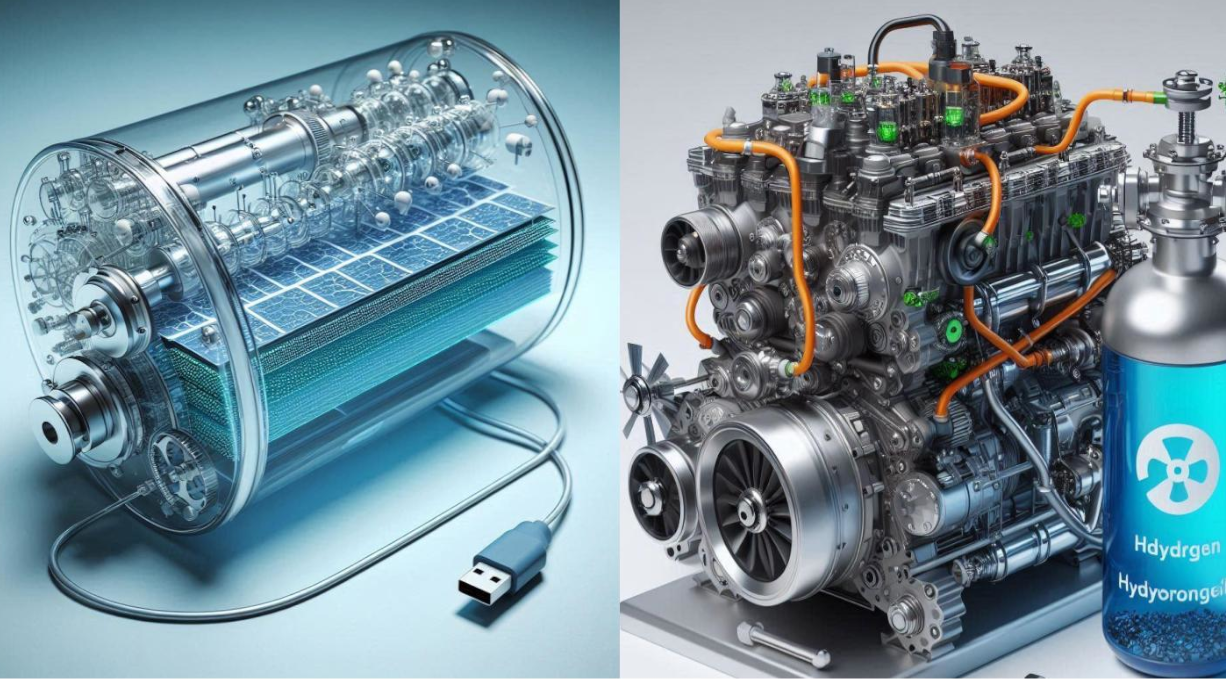
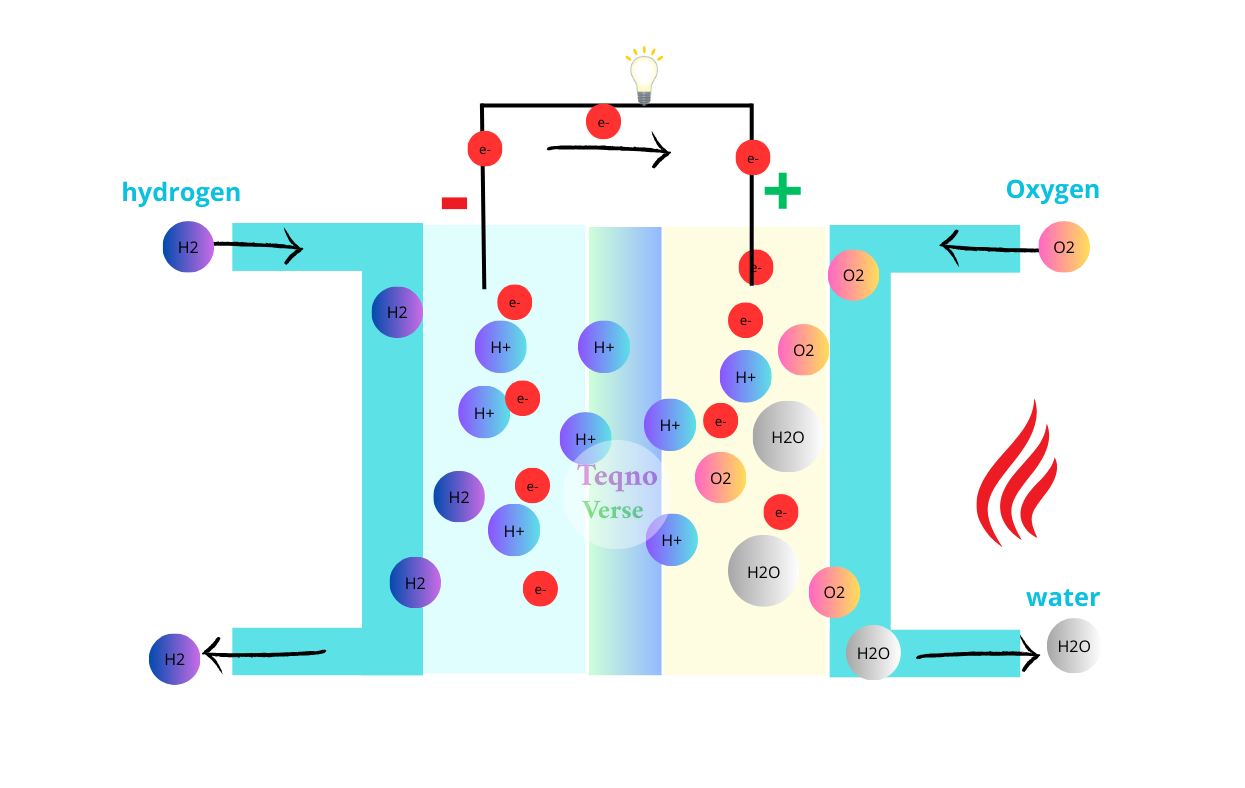
The hybrid system relies on keeping the conventional marine diesel engine intact while adding an integrated hydrogen setup that injects a calculated amount of hydrogen into the air intake of the combustion chamber. Diesel remains the igniting fuel inside the cylinder, while hydrogen acts as a combustion efficiency booster — burning faster and increasing the energy extracted from each cycle without needing more diesel. In other words, it yields higher power output with less diesel consumption.
An electronic control unit manages the operation in real-time, adjusting the hydrogen ratio based on cylinder temperature, combustion pressure, engine load, and speed, while preventing premature ignition or combustion instability. This integration of both fuels within the same engine allows the vessel to utilize hydrogen when available, with the ability to revert to diesel-only operation when needed, without any changes to the core engine structure.
Clear Technical Results… But Cost Isn’t the Direct Goal
Although the system significantly reduces diesel consumption by 24%, this does not necessarily translate to a lower total fuel cost. Hydrogen — whether green, blue, or gray — remains much more expensive than marine diesel in terms of energy cost per kilogram. Consequently, operational costs might rise despite the reduction in diesel use. However, this could change in the future, and in many cases, the primary goal of using hydrogen today is reducing emissions.
The company states that its system can be retrofitted onto an active vessel within one to two weeks without entering a drydock. This makes the technology attractive to fleet operators facing growing regulatory emissions challenges at a time when hydrogen infrastructure remains limited across most global shipping routes.
Commercial Scalability Potential
Newlight estimates that large vessels could achieve annual operational savings of nearly $500,000 due to improved combustion efficiency, despite the higher cost of hydrogen per kilogram. It also notes that the technology’s payback period could be under 18 months under certain operating conditions, particularly as marine fuel prices rise and environmental regulations tighten. Additionally, the company has received regulatory approval from the classification society RINA, which awarded Newlight its Hydrogen Innovation Award.
The voyage involved a 57,038-DWT vessel, allowing the system to be tested under real-world operating conditions. Newlight says it has signed agreements to deploy the system across 12 additional vessels over the coming year, a move aimed at proving the technology’s capability across different engines and diverse maritime routes.