What Is the Dive-LD Robotic Submarine and How Does It Work?
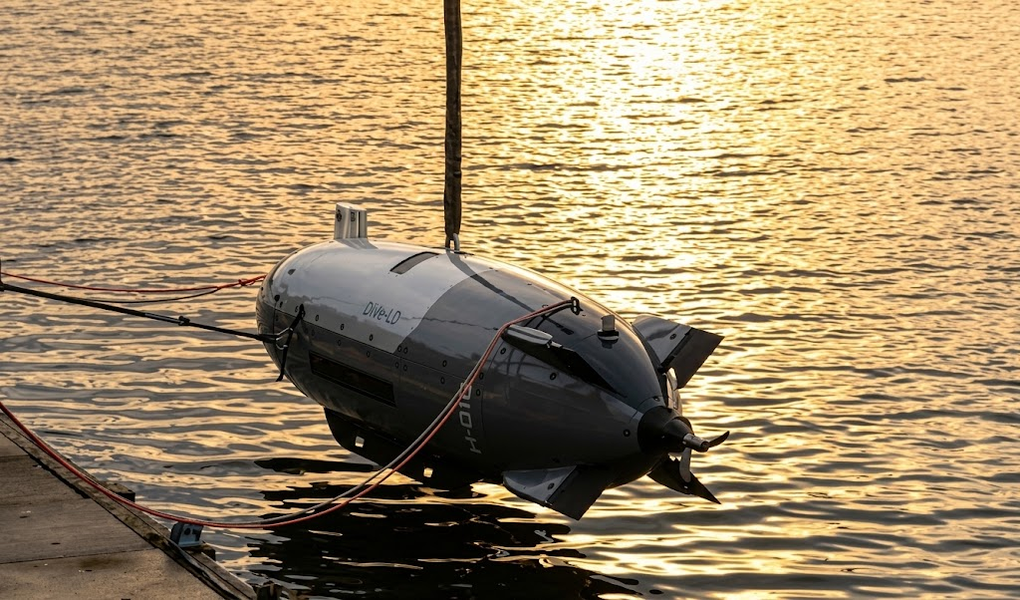
The Dive-LD robotic submarine is one of the world's most advanced autonomous underwater vehicles. Its development began in 2018 at the American company Dive Technologies, before it was acquired by the U.S. defense technology company Anduril Industries in 2022, becoming part of Anduril's maritime systems portfolio. Following U.S. Department of Defense contracts in 2023, the vehicle entered industrial-scale production, with the first publicly announced delivery to the U.S. Navy taking place in 2025. The base version is estimated to cost around $2.5 million per unit.
Dive-LD operates entirely autonomously underwater. Before deployment, it is programmed with a mission plan and objectives, then launched to execute its task without direct human control. When it approaches the surface, it can transmit collected data via radio or satellite communications before continuing its mission.
The vehicle can remain operational for up to 10 consecutive days at depths of 6,000 meters, exceeding the capabilities of most conventional unmanned underwater vehicles. Its exterior resembles a compact submarine, measuring approximately 5.8 meters in length and 1.2 meters in diameter, allowing it to be transported by truck and launched from a pier or a small vessel without requiring a large support ship.
To withstand the immense pressure of deep-ocean operations, its hull is built from high-strength marine-grade aluminum alloys, with titanium reinforcing the areas exposed to the greatest stress. The exterior is covered with composite materials that increase structural strength while reducing hydrodynamic drag. Internally, the vehicle is divided into independent compartments housing the batteries, electronics, and a modular payload bay that can be reconfigured for different missions.
Propulsion is provided by low-noise electric thrusters, giving Dive-LD a minimal acoustic signature and making it well suited for missions requiring stealth and quiet operation.
One of Dive-LD's greatest strengths is its versatility. It can be equipped with different payloads and sensors to map the seabed with sonar, inspect underwater pipelines and cables using high-resolution cameras, detect mines and metallic objects through magnetic sensors, and measure water quality, temperature, salinity, and pollutants.
This flexibility makes it suitable for seabed surveying, critical infrastructure inspection, environmental monitoring, mineral exploration, mine warfare, intelligence missions, and the precise deployment of underwater sensors or devices.
Unlike remotely operated vehicles (ROVs), Dive-LD does not require a fiber-optic tether connecting it to a support vessel. It performs its mission independently throughout the dive and only communicates with the outside world when it nears the surface. This operating concept makes it more cost-effective, more flexible, and easier to deploy from virtually any available vessel—or even directly from a pier.
By combining extreme-depth capability, long endurance, modular payload capacity, and operation from small platforms, Dive-LD has established itself as one of the most capable robotic submarines in modern underwater technology.