Sound Like a Laser: New Metamaterial Tech Beams Audio Directly to Your Ears
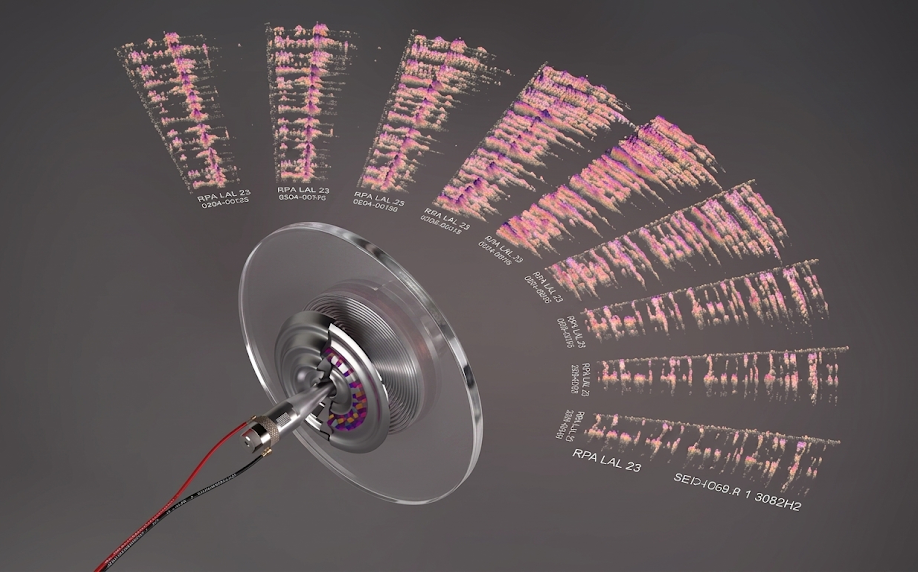
Imagine sitting in an airplane seat when a voice suddenly whispers clearly into your ear, briefing you on your post-landing details, while the passenger sitting right next to you is simultaneously listening to completely different instructions. This sci-fi scenario is now one step closer to reality. Researchers at the Pohang University of Science and Technology (POSTECH) in South Korea have developed a groundbreaking technology capable of directing sound to a specific individual without the need for headphones.
Normally, sound propagates in all directions, making it impossible to target a single person — unlike light, which can be tightly focused into a straight beam, such as a laser. To make sound behave like a laser, the research team utilized ultrasound. Because ultrasound waves have high frequencies and remarkably short wavelengths, they resist scattering and naturally travel in a straight path.
To deliver audible audio via these waves, the researchers employed a modulation technique. Human speech and music are embedded within the ultrasound, which acts as a silent carrier. As this acoustic beam travels through the air, the nonlinear interaction of air molecules naturally unpacks the carrier wave, releasing the audible sound exclusively at the targeted listener’s ears.
While the fundamental concept isn’t entirely new, previous iterations required complex and expensive arrays of hundreds of acoustic emitters. The Korean team solved this major hurdle by consolidating the system into a single transducer, a feat made possible by the use of metamaterials. They integrated an acoustic metasurface at the front of the device, which functions as a physical lens to reshape and steer the sound waves into a tight, straight beam. Additionally, flexible meta-structures were placed at the back to act as shock absorbers, preventing vibrations and lateral sound leakage.
The device successfully transmitted audio across a wide bandwidth from 500 Hz to 10 kHz, covering the vast majority of the human audible spectrum (which scientifically ranges from 20 Hz to 20 kHz). In practical experiments simulating an airplane cabin, the system proved its ability to successfully deliver customized audio broadcasts to individual seats.
Should this technology reach commercial production, its applications will extend far beyond providing private audio experiences for airplane and train passengers. It promises to revolutionize spaces like museums and galleries, allowing each visitor to hear a tailored explanation of the specific exhibit they are standing directly in front of. Soon, location-based, personalized audio that only you can hear could become a seamless part of our daily lives.
The study was published in the journal Nature Communications: https://www.nature.com/articles/s41467-026-73604-0
Related Articles