Tim Cook’s Successor: A Hardware Engineer to Lead Apple in the AI Era
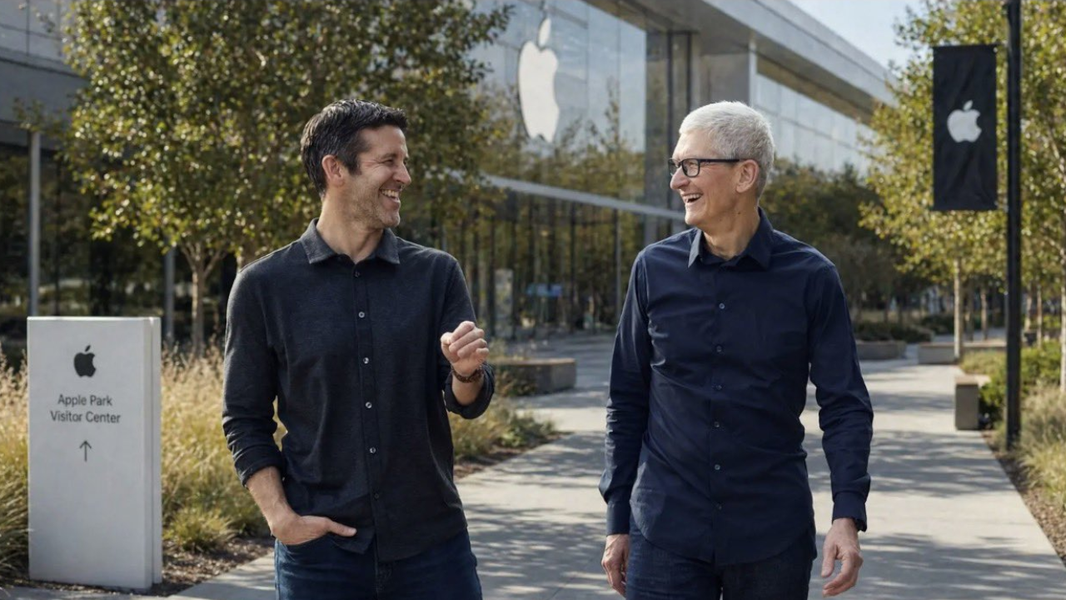
After 15 years, Tim Cook steps down today, paving the way for John Ternus to assume the role of Apple CEO tomorrow. Ternus inherits a company boasting a market capitalization of over $4 trillion and total dominance in the smartphone market, yet one that finds itself lagging behind in the artificial intelligence race.
Ternus faces formidable challenges: hardware development must evolve for the AI era, while on the strategic front, he must balance the tech giant’s heavy manufacturing dependence on China against mounting pressure from the Trump administration to shift production back to the United States.
Apple announced the leadership transition back in April, but Ternus steps in at a pivotal moment. Just eight days into his tenure, on September 9, Apple will host its annual event to unveil the next generation of iPhones, with heavy speculation pointing to its first foldable handset. Marking the first major product showcase under his leadership — and one he has actively prepared for — the event offers an early glimpse into his vision for Apple’s future.
A Different Kind of Leader
At 65, Cook hailed from an operations background. He is widely credited with building and mastering Apple’s massive supply chain, enabling the company to manufacture hundreds of millions of devices every year. Ternus, 51, is a mechanical engineer who joined Apple in 2001 on the product design team. He steadily climbed the ranks to Senior Vice President of Hardware Engineering, directing the teams responsible for Apple’s entire lineup — including the flagship iPhone, which generates the lion’s share of company revenue.
Cook isn’t going far. On the same day, he transitions into the role of Executive Chairman of Apple’s board, focusing on engagement with global policymakers.
This continuity retains Cook’s most vital asset. A hardware engineer naturally lacks the geopolitical bandwidth of a CEO who spent 15 years navigating complex, multinational supply chains and foreign governments.
This division of labor reveals Apple’s strategy for its next chapter: a seasoned engineer leads product innovation just as the very concept of personal devices evolves, while a veteran strategist remains on hand to manage global politics and government relations.
Why Ternus Matters
Ternus comes neither from Cook’s operational background nor from the specialized AI labs currently dominating headlines; he comes from the heart of Apple hardware. That distinction is crucial. Apple’s greatest competitive edge remains its ability to transform raw technology into beautifully integrated products that consumers eagerly buy.
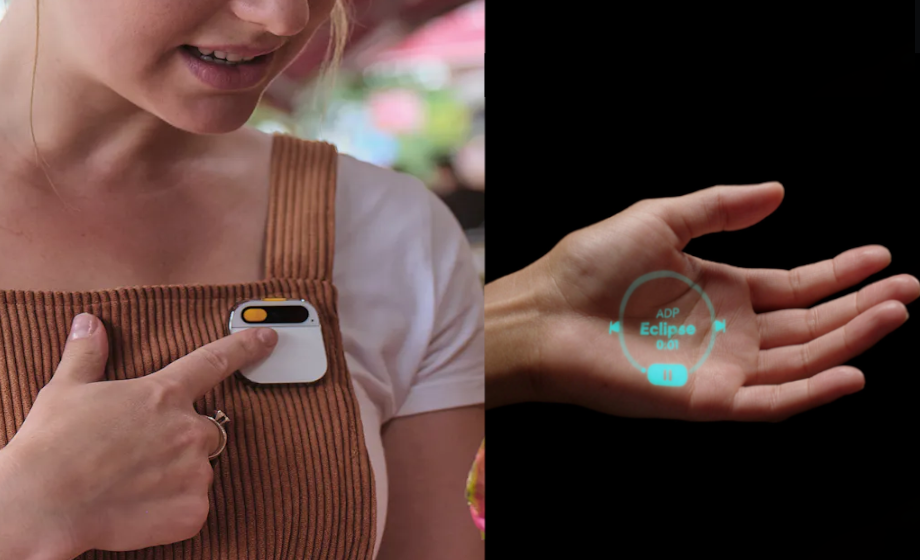
AI alone cannot guarantee a product’s success. Ambitious AI hardware concepts like the Humane AI Pin faded rapidly because the underlying issue was not the AI itself, but the physical product design and user experience.
This is precisely where Ternus’s background becomes invaluable: crafting hardware where AI seamlessly enhances the product, rather than making the device a mere vehicle to showcase AI capabilities.
While Apple has lagged behind peers like Google, Microsoft, and OpenAI — evidenced by delays to the revamped Siri — it does not need to fight the AI battle on their terms. Apple controls its own silicon, hardware, operating systems, and a massive, loyal user base, giving it a unique runway to integrate AI natively across its ecosystem.
The core challenge for Ternus is not simply helping Apple catch up in AI, but leveraging its hardware prowess to make AI genuinely useful inside its devices.
Apple’s real bet on Ternus is that he is the leader who can unify hardware, software, and artificial intelligence into a single, compelling experience.
Related Articles
What is an AI PC ?
What are TPUs: Google’s Powerhouse for AI?
How AI Pin works